

Generative AI: Fundamentals to Advanced Techniques
- Capstone project
- Live masterclass sessions by NUS faculty
- Tool based learning
- Learn from #1 school in Asia
Round Application Deadline
Upcoming deadline: Invalid liquid data.
Programme Overview
The Generative AI: Fundamentals to Advanced Techniques programme from NUS School of Computing (SoC) offers a thorough exploration of AI and machine learning. Participants will build essential skills, from programming and data handling to advanced techniques in neural networks, Python, and TensorFlow. With a blend of theory and hands-on practice, this programme prepares learners to stay ahead in the rapidly evolving AI landscape.
$740 Bn
25%
75%
Programme Highlights

Live Masterclass Sessions
Participants will learn from NUS faculty through live masterclass sessions on Agentic AI topics.

Capstone Project
Progressive Capstone project during the programme will help participants to apply the concepts learned in a real-world scenario.

Prestigious Certification
Earn a certificate from a renowned university in the APAC region.

Tool-based Learning
Equips participants with practical, hands-on experience, preparing them for real-world problem-solving.

Growing Domain
Participants will be allowed a deep dive into technical concepts that keep them abreast of AI’s rapid evolution and advancement.

Live masterclass
Live sessions on agentic AI topics by NUS Faculty
The NUS School of Computing Advantage
#1
#8
#2
Learning Outcomes

Develop a foundation in Python programming, along with a thorough understanding of machine learning concepts, including supervised, unsupervised, and reinforcement learning.

Explore neural networks and deep learning principles, utilising frameworks like TensorFlow and Keras to build and optimise models for various AI tasks.

Gain expertise in Transformer architectures, attention mechanisms, and state-of-the-art models such as BERT and GPT, focusing on their design, customisation, and application.

Learn to implement and leverage generative AI methods, including diffusion models and multimodal systems, to develop creative and innovative AI solutions.

Understand the ethical implications of AI technologies and their impact on society, while exploring practical applications across different industries and domains.
Who is this Programme For?
Early to mid-level tech professionals looking to start a career in or switch to a high-growth field and gain exposure to Generative AI
Mid-level tech professionals looking to gain technical understanding of Generative AI and its technologies and explore the application of AI
Note: Learners are required to have a prior experience with any of the modern object-oriented programming languages.
Programme Modules
Module 1: Overview of Python
Introduction to Python and Programming
Python Data Types
Variables and Operators
Python Programming Constructs: Conditionals, Loops, Functions, Exception Handling
Object-Oriented Programming: Classes and Objects/Instances, Attributes, Methods
Python Libraries: Pandas, MatplotLib
Module 2: Machine Learning Fundamentals
Introduction to Machine Learning
Different Learning Approaches
Unsupervised Learning: Correlation Analysis
Unsupervised Learning: Clustering, K-Means Algorithm
Supervised Learning: Regression, Linear Regression
Supervised Learning: Classification, KNN Algorithm
Introduction to Artificial Neural Networks
Supervised Learning: ANN as a Classifier
ANN's Advantages and Disadvantages
Module 3: Deep Learning Fundamentals and GenAI Intro
Introduction to Deep Learning
Review of ANNs
Deep Convolutional Neural Networks
DCNN: Regression with Tabular Data
DCNN: Classification with Tabular Data
DCNN: Classification with Images
Other Deep Models
Introduction to Generative AI and Transformers
Module 4: Transformer Architecture and Attention Mechanisms
Introduction to Transformer Architecture
Neural Networks, Encoder-Decoder Structure
Introduction and Types of Attention Mechanisms
Mathematical Foundations of Transformers
Transformer Components: Embedding Layers
Transformer Components: Self-Attention Mechanism
Transformer Components: Multi-Head Attention
Transformer Components: Feedforward Networks
Transformer Training: Data Preparation and Training Strategies
Applications: NLP, CV and Others
Transformer Model Extensions and Hybrid Models
Recent Innovations and Future Trends
Module 5: Transformer-based Models (BERT and GPT)
Introduction to Transformer-Based Models: BERT and GPT
BERT: Model Architecture
BERT: Pre-training and Fine-tuning
BERT: Applications and Case Studies
GPT: Model Architecture
GPT: Pre-training and Fine-tuning
GPT: Applications and Case Studies
BERT and GPT: Implementation and Best Practices
Model Combinations and Extensions for Specialisation
Performance Optimisation
Module 6: Reinforcement Learning for Generative AI
Basics of Reinforcement Learning: Markov Decision Process, Value Function, Value-State Function, Policy
Exploration vs Exploitation Dilemma
Bellman Equations
Dynamic Programming
Monte Carlo Learning and Temporal Difference Learning
SARSA and Expected SARSA
Q-Learning and Function Approximation
Policy Gradient (PPO)
Reinforcement Learning for Human Feedback (RLHF)
RLHF Implementation and Case Study; ChatGPT
Direct Preference Optimisation (DPO)
Module 7: Early Image Generation Models (VAEs and GANs)
Gen AI Model Mechanics
Autoencoders
Variational Autoencoders (VAEs)
GANs
Training VAEs
Training GANs
VAEs and GANs for Image Generation
Module 8: Image Generation Using Diffusion Model
Introduction to Diffusion Processes
Diffusion Model Architecture
Training Diffusion Models
Sampling from Diffusion Models
Performance Optimisation for Diffusion Models
Applications of Diffusion Models
Module 9: Transformer for Vision (ViT and CLIP)
Introduction to Computer Vision Models
Transformer Architecture in Computer Vision
Vision Transformer (ViT)
Contrastive Language-Image Pre-Training (CLIP)
Module 10: Multimodal Models: Text to Image (DALL-E and Stable Diffusion)
Fundamentals of Multi-Modal AI
Text-to-Image Generation Models
DALL-E and Stable Diffusion
API Integration
Prompt Engineering for Image Generation
Fine-Tuning for Specialised Tasks
Model Combination
Real World Applications and Case Studies
Ethical Considerations
Model Limitations
Module 11: Generative AI Applications I (LLMs and RAG)
Fundamentals of LangChain
Using LangChain for Conversational AI
Implementing Chains in LangChain
Introduction to Retrieval Augmented Generation (RAG)
Integrating RAG for Performance Optimisation
Working with Documents and Vector Embeddings
Module 12: Generative AI Applications II (Multi-Agents)
Introduction to Multi-Agent Systems
Types of Multi-Agent Systems
Communication Protocols
Coordination Strategies
Multi-Agent Reinforcement Learning
LLMs as Agents
Task Planning and Execution
Problem-Solving Applications
Challenges and Future Trends
Faculty Live Sessions on Agentic AI Topics
Foundations & Architectures of Agentic AI
What is Agentic AI? Difference from LLMs, RAG and multi-agent systems
Agentic AI reference architectures: planners, executors, memory, tool-use
Designing workflows: agent orchestration patterns

Building Workflows & Multi-Agent Collaboration
Goal-driven agents: autonomy, prioritization, feedback loops
Orchestrating multi-agent collaboration: coordination, role assignment
Use cases: Agentic RAG, deep research, digital humans/avatars

Deployment, Scaling & Future of Agentic AI
Deploying agentic AI in enterprise environments
Scalability: cloud integration, monitoring and role hierarchies
Challenges: safety, alignment, regulatory issues
Note: The live masterclass schedule, topics, and subtopics are subject to change based on NUS faculty availability, expert input, and evolving industry trends. Participants will be notified in advance of any updates to ensure a seamless learning experience.
Explore Cutting-Edge Tools

















Programme Faculty

Dr Amirhassan Monajemi
Senior Lecturer, Department of Computer Science
Dr. Amirhassan Monajemi is a senior lecturer in Artificial Intelligence (AI) and Machine Learning at the National University of Singapore (NUS). Previously, he taught at NUS's...
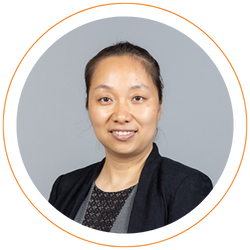
Dr Ai Xin
Lecturer, Department of Computer Science
Dr Ai Xin is a Lecturer at the School of Computing at the National University of Singapore (NUS). She has many years of experience teaching Artificial Intelligence and Data Sc...

Dr Natarajan Prabhu
Senior Lecturer, Department of Computer Science
Dr Natarajan Prabhu is currently a senior lecturer in the School of Computing at the National University of Singapore. With over 10 years of teaching experience in master's, u...

Mr. Mario Favaits
Executive Education Fellow, NUS Advanced Computing for Executives
Mr. Mario Favaits brings over 25 years of leadership experience in sales and operations across diverse industries, including enterprise, automotive, public transport, and soft...

Mr. Uli Hitzel
Executive Education Fellow, NUS Advanced Computing for Executives
Uli Hitzel has been working with data engineering, automation, and distributed systems since the early days of the Internet. With experience from Dyson, Microsoft, Red Hat, Ya...
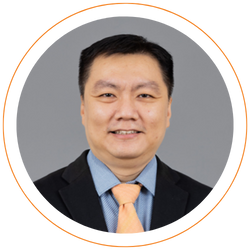
Dr Yeo Wee Kiang
Senior Lecturer, Department of Information Systems & Analytics
Dr. Yeo Wee Kiang is a Senior Lecturer in the Department of Information Systems and Analytics at the NUS School of Computing, specializing in Adaptive Learning and Large Langu...
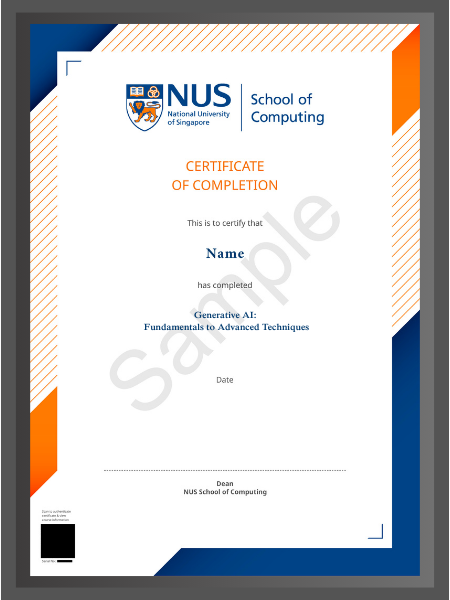
Upon successful completion of the programme, participants will be awarded a verified digital certificate by the NUS School of Computing.
Note: All certificate images are for illustrative purposes only and may be subject to change at the discretion of the NUS School of Computing.
The Learning Experience
More than 300,000 professionals globally, across 200 countries, have chosen to advance their skills with Emeritus and its educational learning partners. In fact, 90 percent of the respondents of a recent survey across all our programmes said that their learning outcomes were met or exceeded. All the contents of the course would be made available to students at the commencement of the course. However, to ensure the programme delivers the desired learning outcomes, the students may appoint Emeritus to manage the delivery of the programme in a cohort-based manner during the course period, the cost of which is already included in the overall course fee of the course.
A dedicated programme support team is available seven days a week to answer questions about the learning platform, technical issues, or anything else that may affect your learning experience.
FAQs
What is the focus of the Generative AI: Fundamentals to Advanced Techniques programme?
This programme provides an in-depth exploration of Generative AI through AI and deep learning, covering modern machine learning concepts, neural networks, transformer architectures, and advanced generative AI techniques. Offered by the NUS School of Computing, it equips professionals to understand and deploy AI applications using cutting-edge AI with deep learning strategies for real-world use cases.
Who should enrol in this programme?
The programme is designed for professionals with a minimum diploma and experience in object-oriented programming. It's ideal for those looking to gain expertise in AI, Machine Learning (ML), and deep learning, particularly in Generative AI, to advance their careers in tech, AI, and ML programmes, ML projects, or AI-driven industries.
What topics are covered in the curriculum?
The curriculum spans Python programming, machine learning programme content (supervised/unsupervised/reinforcement learning), neural networks, transformer models (BERT, GPT), diffusion models, multi-modal AI, and ethical considerations. It blends deep learning and artificial intelligence with hands-on AI ML certification projects and practical deep learning programme elements.
How does this programme compare to a master’s in deep learning?
This 14-week (8-10 hours/week ) programme offers a focused and practical deep learning AI programme. It’s perfect for working professionals looking to upskill through a high-impact deep learning certification.
How are classes conducted?
The programme is delivered entirely online, featuring both live sessions from the NUS School of Computing faculty and industry experts. Pre-recorded content supports flexible learning, while live interaction enhances understanding, a hallmark of top-tier AI certificate programmes and AI certification online experiences.
What hands-on experience will I gain?
Participants will use tools such as TensorFlow, PyTorch, and LangChain while completing a capstone project focused on solving real-world challenges using AI with deep learning. These machine learning projects are designed to simulate scenarios from AI, Machine Learning (ML), and deep learning AI programme applications in industries including finance and healthcare.
What is the weekly time commitment?
You can expect to invest 8–10 hours per week over 14 weeks. This includes video lectures, assignments, and live discussions, mirroring the structure of a machine learning online programme or an artificial intelligence online programme from a top global university.
Are there flexible payment options available?
Yes. You can pay the full fee upfront or choose between two or three instalments. This flexibility supports learners globally. The installment plans and financial support options are available. Participants can contact the programme advisors for more information.
Are there networking opportunities?
Yes. Participants will collaborate with global peers during live sessions and group projects. This not only builds connections but also deepens understanding of AI, ML, and deep learning concepts, offering a community like that of a structured AI certification programme or AI programmes for beginners.
What are the admission requirements?
A minimum diploma and familiarity with object-oriented programming (e.g., Python) are required. Prior experience in tech, data science, or AI and ML programmes is beneficial but not mandatory for joining this AI certification path.
How long will I retain access to learning materials?
You’ll have access to the learning platform and resources for 12 months after programme completion, valuable for review and keeping pace with the rapidly evolving field of AI and deep learning.
What makes this programme unique?
Taught by world-class faculty from the NUS School of Computing, this programme combines theoretical foundations with real-world practice, including tools like Stable Diffusion and GPT-4. It’s one of the best AI programmes available, merging ethical AI practices, technical mastery, and project-based learning, akin to AI certification programmes offered by elite institutions.
What if I don’t find the course appropriate for me after starting the sessions? Can I seek a refund?
We encourage learners to complete the course to fully understand the concepts and derive valuable learning outcomes. However, if you still choose to withdraw, you may request a full refund within 7 days of payment or 14 days after course commencement, whichever comes later. After this period, the course fee becomes non-refundable.
Early registrations are encouraged. Seats fill up quickly!
Starts On